The Serbian Orthodox Church celebrates the Feast of Saint Sava on this day – January 27. Saint Sava (1174 – 1236) was the Serbian Prince, the member of Nemanjic dynasty, Orthodox monk, the first Archbishop of the autocephalous Serbian Church and its founder. Saint Sava, born as Rastko, was the youngest son of Grand Prince Stefan Nemanja (founder of Nemanjic dynasty) and Grand Duchess Ana. He had two brothers – Stephen the First-Crowned and Vukan, the ruler of Zeta. Comparing to his brothers, Sava was different.He respected monastic life, and went to Mount Athos.
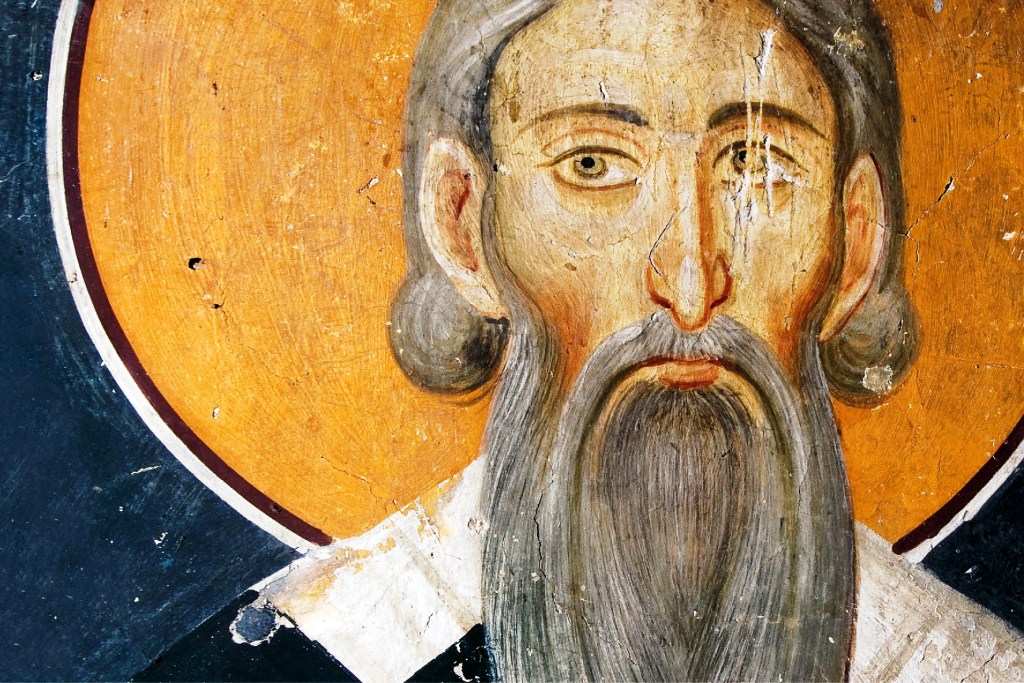
When he arrived to Athos, Saint Sava entered the Russian Orthodox Monastery St. Panteleimon, where he received the monastic name of Sava. In 1998, Saint Sava and His father Stefan Nemanja founded Monastery of Hilandar in Mount Athos. Hilandar become a point of Serbian religious and cultural life.


Having spent 14 years in Mount Athos, Sava had extensive theological knowledge and spiritual power. According to Sava’s biography, he was asked to teach the court and people of Serbia the Christian laws and traditions. Sava then worked on the religious and cultural enlightenment of the Serbian people, educating in Christian morality, love and mercy, meanwhile also working on the church organization.
Sava wrote a work that depicts the life of his father, “The Life of Saint Simeon”, a valuable work of the Serbian medieval literature.

Sava’s most important mission took place in 1219 during his visit to Nicaea when he got the autocephaly for the Serbian Orthodox Church from the Despot of Nicaea Theodore Laskaris and the Patriarch Manuel I Sarantenos. Upon his arrival to Serbia, he determined the Žica monastery as the center of the new Serbian Archbishopric, and his Typicons served as the guidelines for monks’ behavior.
Saint Sava went to pilgrimage on two occasions when he visited Palestine, Jordan, Bethlehem… Returning from his second pilgrimage, he died in 1236 in Tarnovo in Bulgaria, and King Vladislav transferred his body to the Mileševa Monastery.
Years later, in the late 16th century, at the time when the Ottoman Empire ruled this land, the cruel Sinan Pasha transferred Sava’s remains to Belgrade and burnt them. His intention was to hurt and frighten Serbian people, but it was also done due to his own personal fear from the influence that Sava had on people. It is considered that a hand of Saint Sava was saved and that it is kept in the Mileseva Monastery.
Long time after this event, in 1775 Sava was declared a Saint, and since 1823 (under the order of Prince Miloš Obrenović) to date, Saint Sava is celebrated on the 27th of January as the saint-patron day of schools. On that occasion all schools in Serbia prepare a performance and they pay tribute to this great saint, writer and legislator by singing the St. Sava Anthem.
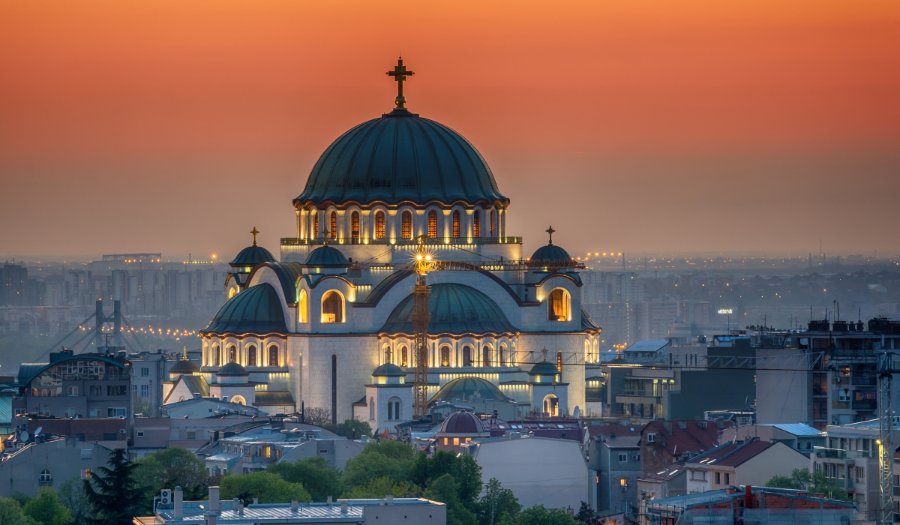
The Temple of Saint Sava, one of the biggest orthodox temples in the world, was built in honor of Sava, in Belgrade, at the spot where the saint’s remains were burnt. Due to its size the Temple dominates the surroundings and it can be seen from different parts of Belgrade. The view on the Temple is especially stunning at night, under the spotlights.

 Religion, Law and Politics